
The English language contains many verbs that change their forms depending on tense. One verb that often confuses learners is fly, especially its past participle flown. Many people search for flown meaning because they are unsure when to use it, how it differs from flew, and whether it can be used in everyday conversations, writing, or professional communication.
If you’ve ever wondered whether to say “I have flew” or “I have flown,” you’re not alone. This is one of the most common grammar mistakes made by English learners. Understanding the meaning and usage of flown will help you write more accurately and speak more confidently.
Besides referring to traveling by air, the word flown is also used in figurative expressions, idioms, literature, and business communication. Whether you’re learning English, preparing for exams, or simply expanding your vocabulary, mastering this word is essential.
What Does “Flown” Mean?
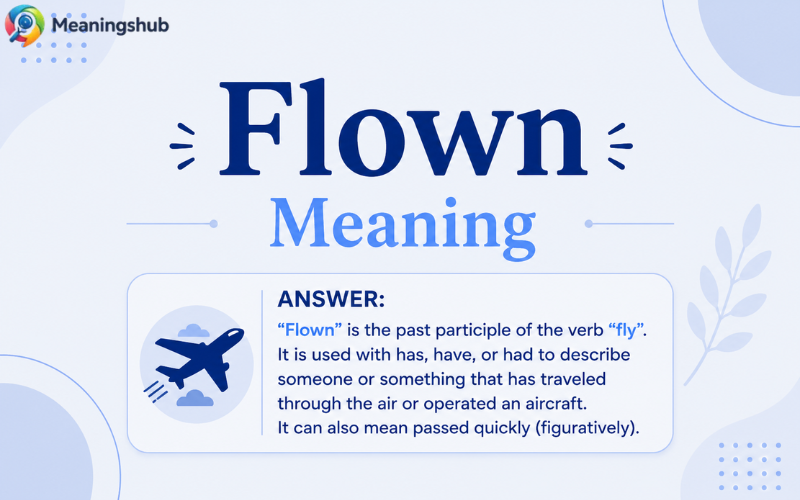
Flown is the past participle of the verb “fly.” It is used with helping verbs such as “has,” “have,” or “had” to describe someone or something that has traveled through the air or moved by aircraft.
Examples include:
- I have flown to London.
- She has flown a helicopter.
- The bird has flown away.
- They had flown before the storm arrived.
In each sentence, flown works as the past participle of fly.
What Is the Meaning of Flown?
The word flown means:
- Traveled through the air.
- Traveled by airplane.
- Moved while flying.
- Operated an aircraft.
- Left quickly (in figurative expressions).
It always refers to the completed action of flying.
Verb Forms of Fly
Understanding the verb forms makes using flown much easier.
| Base Form | Past Simple | Past Participle |
|---|---|---|
| Fly | Flew | Flown |
Examples:
- I fly every week.
- I flew yesterday.
- I have flown many times.
This pattern is essential in English grammar because flown cannot normally replace flew in the simple past tense.
Difference Between Flew and Flown
One of the biggest mistakes learners make is confusing these two words.
| Flew | Flown |
|---|---|
| Past tense | Past participle |
| Used alone | Used with has, have, had |
| I flew home yesterday. | I have flown home many times. |
| Simple past | Present perfect, past perfect, and passive structures |
Incorrect:
❌ I have flew to Paris.
Correct:
✅ I have flown to Paris.
How to Pronounce Flown
The pronunciation is simple:
Flown sounds like “flone.”
It rhymes with:
- Stone
- Phone
- Known
- Shown
Practicing pronunciation helps improve spoken English.
When Should You Use Flown?
Use flown whenever you’re using perfect tenses.
Examples:
Present Perfect
- I have flown to Dubai.
- She has flown across Europe.
- We have flown together before.
Past Perfect
- They had flown before sunrise.
- He had flown several missions.
Future Perfect
- By next month, I will have flown ten times.
Notice that flown always follows a helping verb.
Related Post: I Appreciate It Meaning
Flown in Everyday Conversation
Native speakers use flown regularly.
Examples:
- Have you ever flown internationally?
- I’ve flown economy all my life.
- She’s flown with that airline before.
- We’ve flown together twice.
- My parents have never flown overseas.
These sentences are common in daily English.
Flown Meaning in Aviation
Pilots use the word differently.
Example:
- She has flown commercial airplanes for twenty years.
- He has flown military aircraft.
- The captain has flown this route hundreds of times.
Here, flown means operated or piloted an aircraft.
Flown Meaning for Birds
The word also describes birds.
Examples:
- The eagle has flown away.
- Thousands of birds have flown south for winter.
- The pigeon has flown back home.
This is the original meaning of the verb fly.
Figurative Meaning of Flown
Sometimes flown is not literal.
Examples:
- Time has flown.
- The years have flown by.
- The afternoon has flown.
In these examples, flown means passed very quickly.
People often say:
“Time has flown.”
This means time seemed to pass faster than expected.
Common Sentences Using Flown
- I’ve flown first class once.
- She’s flown around the world.
- We’ve flown together before.
- He’s flown over the mountains.
- They’ve flown to Japan several times.
- The drone has flown successfully.
- The balloon has flown into the sky.
- Our plane has flown safely.
Each sentence demonstrates correct grammar.
Synonyms Related to Flown
Depending on context, similar words include:
- Traveled
- Soared
- Glided
- Drifted
- Floated
- Airborne
- Piloted
- Departed
- Journeyed
- Escaped
Each has a slightly different meaning but may be appropriate in specific contexts.
Common Idioms with Fly
English contains many expressions based on fly.
Examples:
- Time flies.
- Fly high.
- Fly off the handle.
- On the fly.
- Fly under the radar.
- When pigs fly.
- Fly by night.
- Fly into a rage.
These idioms don’t always involve actual flying but are common in conversation.
Flown in Passive Voice
The word flown also appears in passive voice constructions. In these cases, the subject receives the action instead of performing it.
Examples:
- The supplies were flown to the affected area.
- The patient was flown to the nearest hospital.
- The rescue team was flown into the mountains.
- Fresh flowers are flown in every morning.
- Emergency equipment was flown overseas.
Passive voice is common in news reports, aviation, military communication, and formal writing.
Flown Meaning in Different Contexts
The meaning of flown changes slightly depending on the sentence.
| Context | Meaning of Flown | Example |
|---|---|---|
| Air travel | Traveled by airplane | We have flown to Canada twice. |
| Birds | Moved through the air | The owl has flown away. |
| Pilot | Operated an aircraft | She has flown helicopters for years. |
| Time | Passed quickly | The weekend has flown by. |
Understanding the context makes the meaning much clearer.
Examples of Flown in Sentences
Here are more examples showing how naturally flown fits into everyday English.
- I have flown internationally several times.
- She has flown across the Atlantic Ocean.
- We had flown before the weather became worse.
- They have flown on this airline before.
- My grandparents have never flown.
- The eagle has flown back to its nest.
- He has flown drones professionally.
- She has flown private jets.
- The package was flown overnight.
- Time has flown since graduation.
These examples demonstrate both literal and figurative uses.
Common Grammar Mistakes
Many learners confuse flew and flown.
Incorrect:
- I have flew to New York.
- She has flew before.
- We had flew yesterday.
Correct:
- I have flown to New York.
- She has flown before.
- We had flown before sunset.
Remember this simple rule:
Fly → Flew → Flown
If you use has, have, or had, the correct word is almost always flown.
Flown in Business English
Professionals often use flown when discussing travel.
Examples:
- Our executives have flown to Singapore for the conference.
- The engineer was flown to the project site.
- Several consultants have flown in for today’s meeting.
- The CEO has flown overseas to meet investors.
Business reports frequently include this word because international travel is common.
Flown in Literature
Authors often use flown to describe the passing of time or emotions.
Examples include:
- Time has flown since we last met.
- Happiness had flown from his heart.
- The years have flown by.
- Hope had flown away.
These expressions add emotion and imagery to writing.
Everyday Phrases with Flown
Native English speakers commonly say:
- Time has flown.
- The weekend has flown by.
- Summer has flown past.
- Opportunity has flown away.
- My vacation has flown by.
These phrases mean something passed much faster than expected.
Flown vs. Gone
Some learners confuse these words.
| Flown | Gone |
|---|---|
| Specifically refers to flying | Refers to leaving in any way |
| Used with aircraft or birds | Used for all types of movement |
| They have flown home. | They have gone home. |
| More specific | More general |
Every time someone has flown, they have gone, but not everyone who has gone has flown.
Flown vs. Fly
Another common confusion involves the base verb.
Examples:
- I fly every week. (Present)
- I flew yesterday. (Past)
- I have flown many times. (Past participle)
Choosing the correct verb form depends on the tense.
Why Is “Flown” Important?
Learning flown improves:
- Grammar accuracy
- Speaking confidence
- Professional writing
- Academic English
- Travel conversations
- Business communication
- Reading comprehension
- Vocabulary development
It is one of the most useful irregular verb forms in English.
Related Words
When studying flown, it’s helpful to know similar words.
- Fly
- Flew
- Flight
- Flying
- Airborne
- Aviation
- Pilot
- Journey
- Depart
- Travel
- Soar
- Glide
- Hover
- Land
- Aircraft
These words frequently appear together in aviation and travel topics.
Tips for Remembering Flown
Use these simple tricks:
- Flown always follows has, have, or had.
- Never say have flew.
- Think of the verb pattern: Fly → Flew → Flown.
- Practice using the word in daily conversations.
- Read English articles and notice how native speakers use it.
The more examples you see, the easier it becomes to remember.
Frequently Asked Questions
What is the meaning of flown?
Flown is the past participle of the verb fly. It means someone or something has traveled through the air, usually by airplane or while flying.
Is “flown” a real English word?
Yes. It is the correct past participle of fly.
What is the difference between flew and flown?
Flew is the simple past tense, while flown is the past participle used with has, have, or had.
Can I say “I have flew”?
No. The correct sentence is “I have flown.”
What does “time has flown” mean?
It means time has passed very quickly.
Is flown used only for airplanes?
No. It can refer to birds, insects, drones, helicopters, balloons, and figurative expressions.
Can pilots use the word flown?
Yes. Pilots commonly say they have flown a particular aircraft or route.
Is “flown” formal?
No. It is a standard English word suitable for both formal and informal communication.
What tense uses flown?
It is used in the present perfect, past perfect, future perfect, and many passive voice constructions.
What are some common examples of flown?
Examples include:
- I have flown to London.
- She has flown a helicopter.
- Time has flown by.
- The birds have flown south.
Conclusion
Understanding the flown meaning is essential for mastering English grammar and using irregular verbs correctly. As the past participle of fly, flown is used with helping verbs such as has, have, and had to describe completed actions involving air travel, piloting aircraft, birds in flight, or even figurative expressions like “time has flown.” Knowing the difference between fly, flew, and flown helps you avoid common grammar mistakes and communicate more naturally in both spoken and written English. Whether you’re discussing travel, aviation, everyday conversations, or professional communication, using flown correctly will make your English sound more accurate, fluent, and confident.
