
Windows are essential parts of every home, office, and building. They provide natural light, ventilation, insulation, and aesthetic appeal. However, when discussing window components, many people become confused about the terms window seal and window sill. These two terms sound somewhat similar, but they refer to completely different parts of a window. As a result, homeowners, DIY enthusiasts, contractors, and even some real estate professionals often search for window seal or sill to determine which term is correct.
Understanding the difference between a window seal and a window sill is important because each serves a unique purpose. Using the wrong term can create confusion when discussing repairs, maintenance, installations, or home improvement projects. Whether you are replacing a damaged window, improving energy efficiency, or simply learning about home construction, knowing the distinction can help you communicate more accurately.
Window Seal or Sill: Which One Is Correct?
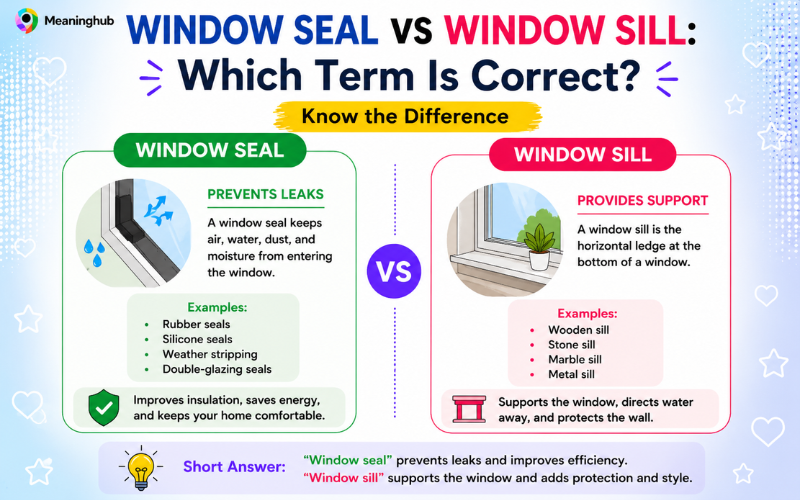
Both terms are correct, but they refer to different parts of a window. A window seal helps prevent air and moisture from entering, while a window sill is the horizontal ledge located at the bottom of a window.
Many people mistakenly use these terms interchangeably, but they perform entirely different functions.
Understanding Window Components
Before comparing a window seal and a window sill, it helps to understand the basic structure of a window. A standard window consists of several components working together to provide insulation, support, and functionality.
| Window Part | Function |
|---|---|
| Frame | Supports the entire window |
| Glass Pane | Allows visibility and light |
| Seal | Prevents air and water leaks |
| Sill | Forms the bottom ledge |
| Sash | Holds the glass in place |
| Trim | Decorative finishing element |
Each component contributes to the performance and durability of the window.
What Is a Window Seal?
A window seal is a protective barrier designed to block unwanted air, water, dust, and moisture from entering a building. Modern windows often use specialized seals between glass panes and around the frame.
The primary purpose of a seal is to maintain insulation.
Without a proper seal:
- Air can leak inside.
- Moisture may enter.
- Energy efficiency decreases.
- Utility bills increase.
- Condensation develops.
A damaged window seal often leads to noticeable performance issues.
Types of Window Seals
Different windows use different sealing systems.
Common types include:
Weather Seals
These prevent drafts and air leakage around the frame.
Rubber Seals
Flexible materials used to block moisture and air infiltration.
Double-Glazing Seals
Located between multiple glass panes to trap insulating gas.
Silicone Seals
Used around window edges to create waterproof protection.
Each type helps improve energy efficiency and indoor comfort.
Signs of a Failed Window Seal
Homeowners should watch for common indicators of seal failure.
These include:
- Foggy glass
- Condensation between panes
- Drafts near windows
- Increased energy bills
- Visible cracks in sealant
- Moisture buildup
When a seal fails, the window’s insulating performance often declines significantly.
What Is a Window Sill?
A window sill is the horizontal shelf or ledge positioned at the bottom of a window opening. It can be located on the interior, exterior, or both sides of the window.
Unlike a seal, a sill is a structural component.
Its functions include:
- Supporting the window frame
- Directing water away
- Improving appearance
- Providing a decorative ledge
- Protecting the wall below
Window sills are common in residential and commercial buildings.
Interior vs Exterior Window Sills
Not all window sills are the same.
Interior Sill
Located inside the home.
Common uses:
- Displaying plants
- Holding decorations
- Supporting small items
Exterior Sill
Located outside.
Primary purposes:
- Water drainage
- Weather protection
- Structural support
Both play important roles in protecting the building.
| Feature | Window Seal | Window Sill |
|---|---|---|
| Purpose | Prevents leaks | Supports and protects |
| Material | Rubber, silicone, foam | Wood, stone, metal |
| Location | Around frame and glass | Bottom of window |
| Maintenance | Replace when damaged | Repair if cracked |
| Function | Insulation | Structure and drainage |
This comparison highlights why the terms should not be confused.
Why People Confuse Window Seal and Window Sill
Several factors contribute to the confusion.
First, the words sound somewhat similar.
Second, both are associated with windows.
Third, many homeowners rarely encounter the technical terminology until repairs become necessary.
For example, someone noticing water damage near a window may assume the sill is the problem when the actual cause is a failed seal.
Understanding the distinction helps identify issues correctly.
The Role of Window Seals in Energy Efficiency
Modern homes rely heavily on effective sealing systems.
A quality seal helps:
- Reduce heating costs
- Lower cooling expenses
- Improve indoor comfort
- Minimize air leakage
- Increase energy efficiency
Energy-efficient windows often contain advanced seals designed to maintain insulation for many years.
When seals fail, heating and cooling systems must work harder.
Related Post: What Day Is Next Friday
The Importance of Window Sills
Window sills contribute to both function and appearance.
Benefits include:
- Structural support
- Water management
- Added durability
- Enhanced aesthetics
- Increased property value
A properly maintained sill protects surrounding walls from moisture damage.
Materials Used for Window Sills
Window sills can be constructed from various materials.
Wood
Traditional and attractive but requires maintenance.
Stone
Durable and elegant.
Marble
Popular in luxury homes.
Vinyl
Affordable and low maintenance.
Metal
Strong and weather-resistant.
The best material depends on budget, climate, and design preferences.
Common Window Seal Materials
Seals are usually made from flexible materials capable of creating airtight barriers.
Common options include:
- Silicone
- Rubber
- Foam
- EPDM rubber
- Polyurethane
These materials are selected for durability and weather resistance.
Can a Window Seal Be Repaired?
In many cases, yes.
Minor issues can sometimes be addressed through resealing.
However, severe seal failure may require:
- Glass replacement
- Window replacement
- Professional repair
The appropriate solution depends on the extent of the damage.
Can a Window Sill Be Repaired?
Yes.
Repair options include:
- Sanding damaged areas
- Filling cracks
- Repainting surfaces
- Replacing rotten wood
- Installing a new sill
Regular maintenance extends the lifespan of window sills significantly.
Common Problems with Window Sills
Homeowners frequently encounter:
- Rotting wood
- Water damage
- Cracking
- Peeling paint
- Mold growth
Addressing these issues early prevents larger structural problems.
How Weather Affects Seals and Sills
Weather can impact both components differently.
Effects on Seals
- UV damage
- Shrinkage
- Cracking
- Hardening
Effects on Sills
- Water exposure
- Expansion and contraction
- Paint deterioration
- Material wear
Routine inspections help identify damage before it worsens.
Seal vs Sill in Home Maintenance
When maintaining windows, both components deserve attention.
Recommended maintenance tasks include:
| Maintenance Task | Seal | Sill |
|---|---|---|
| Inspect annually | ✓ | ✓ |
| Clean regularly | ✓ | ✓ |
| Repair damage | ✓ | ✓ |
| Repaint surface | ✗ | ✓ |
| Replace when necessary | ✓ | ✓ |
Proper maintenance improves longevity and performance.
How Builders Use These Terms
Construction professionals use precise terminology.
When a contractor mentions a seal, they usually refer to weatherproofing or insulation components.
When they mention a sill, they are discussing the bottom structural portion of the window.
Using the correct term helps avoid costly misunderstandings.
Why Accurate Terminology Matters
Correct terminology becomes especially important during:
- Home inspections
- Property sales
- Construction projects
- Window replacements
- Repair estimates
Misidentifying the issue can lead to incorrect repairs and unnecessary expenses.
Which Component Is More Important?
Both are essential.
A seal protects against air and moisture infiltration.
A sill supports the window and manages water drainage.
Without a functioning seal, energy efficiency suffers.
Without a proper sill, water damage and structural issues may develop.
The best-performing windows require both components to function correctly.
Frequently Asked Questions
Is it window seal or window sill?
Both are correct terms, but they refer to different parts of a window.
What is a window seal?
A window seal prevents air, moisture, and drafts from entering through the window.
What is a window sill?
A window sill is the horizontal ledge located at the bottom of a window.
Can a broken window seal be fixed?
Yes, depending on the extent of the damage, it may be repaired or replaced.
What causes window seal failure?
Age, weather exposure, poor installation, and temperature fluctuations are common causes.
Why is my window sill rotting?
Excess moisture and inadequate drainage often cause sill deterioration.
Which affects energy efficiency more?
The window seal typically has a greater impact on energy efficiency.
Can I replace a window sill myself?
Minor repairs are often DIY-friendly, but major replacements may require professional assistance.
How often should window seals be inspected?
At least once per year.
Do all windows have sills?
Most residential windows include some form of sill.
Conclusion
The debate between window seal or sill is not about choosing the correct word but understanding that both terms describe different window components. A window seal is responsible for preventing drafts, moisture intrusion, and energy loss, while a window sill provides structural support, drainage, and aesthetic value. Because these components serve different purposes, using the proper terminology is important when discussing repairs, maintenance, construction, or home improvement projects. By understanding the distinction between a window seal and a window sill, homeowners can communicate more effectively, identify problems accurately, and make better decisions regarding window care and replacement.
