
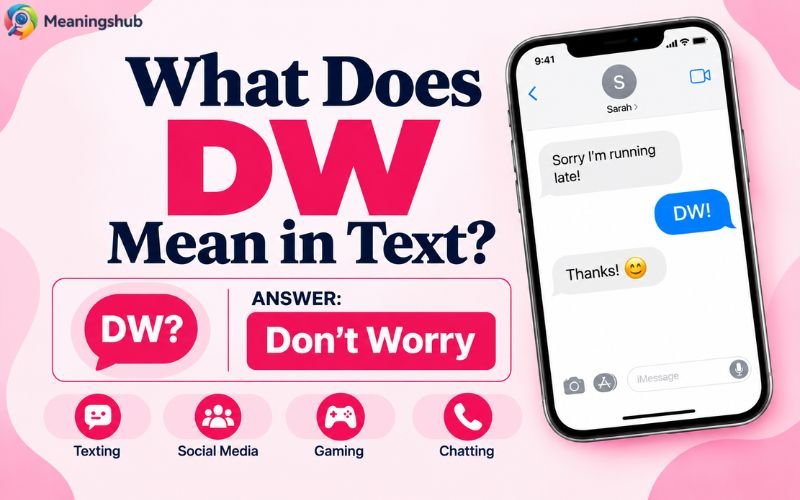
Have you ever received a message that just says “DW” and had to stop for a second to figure it out? If so, you’re not alone. DW meaning in text is usually “don’t worry.” It’s a quick way to tell someone that everything is okay or that they shouldn’t stress about something. You’ll often see it in texts, Snapchat messages, Instagram chats, Discord, and other casual conversations. For example, if you apologize for replying late and your friend says “DW,” they’re simply telling you that it’s fine.
DW is short, friendly, and easy to type. It can be used when someone is apologizing, feeling nervous, asking for help, or worrying about a problem. The exact feeling can change with the conversation, but the basic idea stays the same: “Don’t worry.” In this article, we’ll look at what DW means, where the abbreviation came from, how people use it today, and how to respond when someone sends it.
You’ll also see real examples, related texting slang, and answers to common questions about DW meaning. Once you know the context, this abbreviation is actually pretty easy to understand. It’s one of those short texting terms that can make a conversation feel more relaxed and reassuring.
What Does DW Mean in Text?
DW means “don’t worry” in text messages and online chats.
People use it when they want to reassure someone or tell them that a situation isn’t a big deal. It can also be used after someone apologizes or says they’re concerned about something.
For example:
“Sorry, I forgot to bring your book.”
“DW, you can bring it tomorrow.”
Here, DW means “Don’t worry.” The person isn’t upset about the missing book and is telling their friend not to feel bad.
The abbreviation is usually casual. It works well between friends, classmates, family members, gaming friends, and people who regularly chat online.
Meaning at a Glance
| Term | Meaning | Tone | Common Platform |
|---|---|---|---|
| DW | Don’t worry | Casual, reassuring | Text, Snapchat |
| DW! | Don’t worry! | Friendly, positive | Text, Instagram |
| dw | Don’t worry | Relaxed | Chat, Discord |
| DW about it | Don’t worry about it | Reassuring | Text, social media |
Why Do People Say DW?
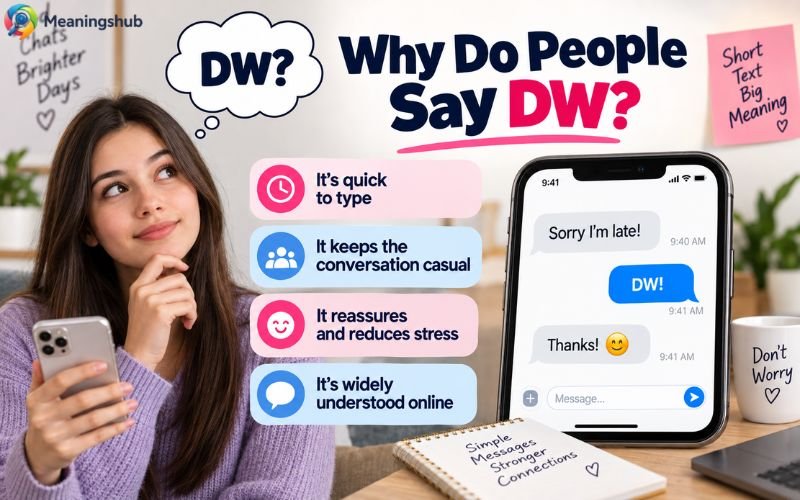
People use DW because it saves time and keeps the conversation simple.
Imagine a friend sends you:
“I’m sorry I’m running 10 minutes late.”
You could reply:
“Don’t worry!”
Or you could quickly type:
“DW!”
Both mean almost the same thing.
The shorter version feels natural in casual texting. When people are chatting quickly, they don’t always type every word. Common phrases get shortened, especially when their meaning is already clear.
There can also be a friendly feeling behind DW. If someone is worried that they’ve made a mistake, a simple “DW” can make them feel less uncomfortable.
For example:
“Sorry I couldn’t call you yesterday.”
“DW, I understand.”
That response doesn’t just give information. It reassures the other person that there isn’t a problem.
Related Post: TY Meaning in Text: What Does “TY” Mean?
What Is the Origin of DW?
There isn’t one specific person or date linked to the creation of DW. Like many texting abbreviations, it developed as online chatting and text messaging became common.
People have been shortening everyday phrases for years. Early internet chat rooms, instant messaging services, forums, and mobile texting all encouraged users to communicate quickly.
“Don’t worry” was a natural phrase to shorten because both words are common and the initials are easy to recognize. D comes from “don’t,” while W comes from “worry.”
Over time, DW became familiar in casual digital conversations.
The abbreviation also fits with other short expressions people use online. Terms such as LOL, BRB, IDK, BTW, TY, and NP all became part of the wider language of texting and internet chats.
Unlike some slang terms that appear and disappear quickly, DW remains useful because the phrase itself comes up often. People regularly need to reassure someone, so the short form continues to have a purpose.
DW Meaning in Modern Texting
Today, DW is still widely understood in casual online conversations.
You might receive it after making an apology:
“Sorry I didn’t answer earlier.”
“DW!”
You might also see it when someone is worried:
“I think I messed up the assignment.”
“DW, we’ll figure it out.”
It can even appear after someone cancels plans:
“Sorry, I can’t make it tonight.”
“DW, we’ll hang out another day.”
In each example, the person using DW is trying to reduce stress or show that they aren’t upset.
The tone is usually friendly, but context still matters. A plain “dw” can sometimes feel very brief. If someone wants to sound warmer, they might write “DW 😊,” “don’t worry!” or “dw about it.”
How Is DW Used on Social Media?
You’ll often find DW in direct messages, comments, group chats, and replies.
On Snapchat or Instagram, someone may use it after a friend apologizes or explains a situation.
For example:
“Sorry, I accidentally sent that to you.”
“DW 😂”
The laughing emoji makes it clear that the sender isn’t taking the mistake seriously.
On Discord, DW is also useful in fast-moving conversations. Someone may type it while discussing plans, games, or everyday problems.
Social media has made short abbreviations like DW easy to recognize. Even if someone doesn’t use the term themselves, they can usually understand it from context.
DW in Gaming Chats
Gaming is another place where short abbreviations are useful.
When you’re playing a fast-paced game, typing a full sentence isn’t always practical. Players may use DW to reassure teammates after a mistake.
For example:
“Sorry, I missed the shot.”
“dw, we still got this.”
Or:
“I lost the item you gave me.”
“DW, I have another one.”
The abbreviation keeps the conversation moving.
Gaming communities also use many other short terms, such as GG for “good game,” GLHF for “good luck, have fun,” and AFK for “away from keyboard.” DW fits naturally into this short and fast style of communication.
Related Post: MK Meaning in Text: Complete Guide(2026)
DW and Gen Z Usage
Gen Z uses DW, although not every person uses it in exactly the same way.
You may see lowercase “dw” more often in relaxed conversations. Lowercase texting can feel less formal and more natural, especially when friends are messaging each other.
Compare these:
“DW!”
and
“dw lol”
The first can sound more direct and reassuring. The second feels more relaxed and conversational.
People may also add emojis:
“dw 😊”
“dw lol”
“DW, you’re good!”
There isn’t a strict rule for how DW should look. Capital letters, lowercase letters, emojis, and extra words can all change the mood slightly.
Common Ways DW Appears
| Version | Meaning | Typical Feel |
|---|---|---|
| DW | Don’t worry | Simple and clear |
| dw | Don’t worry | Very casual |
| DW! | Don’t worry! | Reassuring |
| dw lol | Don’t worry | Relaxed/playful |
| dw 😊 | Don’t worry | Warm and friendly |
Real-Life Examples of DW
Seeing DW in actual conversations makes the meaning much easier to understand.
Example 1: Late Reply
Jake: “Sorry I took so long to reply.”
Mia: “DW, I was busy too.”
Mia is telling Jake that he doesn’t need to apologize or feel bad.
Example 2: Making a Mistake
Alex: “I accidentally deleted the photo.”
Sam: “DW, I saved a copy.”
Here, Sam is reassuring Alex that the problem isn’t serious.
Example 3: Changing Plans
Liam: “I can’t come tonight. Sorry!”
Noah: “DW, we’ll do it another day.”
Noah is letting Liam know that he isn’t upset about the change.
Example Sentences
| Situation | Example | Explanation |
|---|---|---|
| Late response | “DW, take your time.” | No need to hurry |
| Apology | “DW, it’s okay.” | The mistake isn’t a big problem |
| Gaming mistake | “dw, we can try again.” | Don’t stress about losing |
| Cancelled plans | “DW, another day works.” | The change is okay |
How Should You Reply to DW?
If someone sends you DW, you usually don’t need a long response.
You can simply say:
“Thanks!”
Or:
“I appreciate it.”
If you were apologizing, you might say:
“Okay, thanks 😊”
If someone is reassuring you about a problem, “TY” can work too.
For example:
“DW, it’s not your fault.”
“TY, I appreciate that.”
You can also continue the conversation naturally instead of replying directly to the abbreviation.
For instance:
“DW, I’ll handle it tomorrow.”
You might answer:
“Sounds good!”
The right reply depends on what the other person was saying before they used DW.
Related Post: What Does RD Mean? RD Meaning in Text, Slang, and Social Media
Is DW Always Friendly?
Usually, yes. DW is generally meant to reassure someone.
However, the tone can depend on the rest of the message.
For example:
“dw.”
This can feel a little dry if the conversation is serious.
Compare that with:
“DW!! You’re totally fine 😊”
The second response clearly feels warmer.
Text doesn’t include voice tone or facial expressions, so punctuation and emojis sometimes help show emotion.
Still, you shouldn’t assume that a short “dw” is rude. Many people naturally use lowercase abbreviations and don’t mean anything negative by them.
DW vs. No Worries
DW and “no worries” are very similar, but they’re used slightly differently.
“Don’t worry” directly tells someone not to feel concerned.
“No worries” often responds to an apology, request, or small inconvenience.
For example:
“Sorry I’m late.”
“No worries!”
You could also say:
“DW!”
Both work in casual conversation.
The difference is small enough that people may use them almost interchangeably.
Related Slang Terms
If you’re learning texting slang, you’ll probably see several expressions that have a similar purpose to DW.
1. NP
NP means “no problem.”
It’s often used after someone says thank you or apologizes.
“Sorry about that.”
“NP!”
2. YW
YW means “you’re welcome.”
It’s commonly used after someone says “TY” or “thanks.”
“TY for helping!”
“YW!”
3. NBD
NBD means “no big deal.”
It’s used to say that something isn’t serious or important.
“Sorry I forgot.”
“NBD.”
4. IDC
IDC usually means “I don’t care.”
Unlike DW, it doesn’t specifically reassure someone. Depending on the situation, IDC can sound neutral, dismissive, or even rude.
“IDC which movie we watch.”
5. TY
TY means “thank you.”
It’s one of the most common short ways to show appreciation in online chats.
“TY for sending that!”
Related Slang Comparison
| Term | Meaning | When to Use |
|---|---|---|
| DW | Don’t worry | Reassure someone |
| NP | No problem | Respond to thanks/apology |
| YW | You’re welcome | Respond to thanks |
| NBD | No big deal | Say something isn’t serious |
| TY | Thank you | Show appreciation |
Can DW Have Other Meanings?
In ordinary texting, DW usually means “don’t worry.”
However, abbreviations can have different meanings in specific situations. A company, school, game, technical community, or other group may use the same letters for something completely different.
That’s why context matters.
For example, if someone says:
“DW, you’re fine.”
The meaning is almost certainly “don’t worry.”
But if you see DW inside a technical document or as part of a specific name, it could mean something else.
When you’re looking at a casual text message, though, there’s usually no need to overthink it. “Don’t worry” is the standard meaning.
Is DW Formal or Informal?
DW is informal.
It’s best suited to casual communication with friends, family, classmates, gaming teammates, and people you regularly message.
I wouldn’t use “DW” in a formal email to a customer, employer, teacher, or business contact unless the conversation is already very casual.
For example, this is fine between friends:
“Sorry I forgot your charger.”
“DW!”
But in a professional email, you’d normally write:
“Please don’t worry about it.”
Or:
“No problem at all.”
Using the full phrase sounds clearer and more professional.
Why Is DW So Popular?
There are a few simple reasons DW has stayed useful.
First, it’s extremely short. Two letters are much faster to type than “don’t worry.”
Second, the meaning is easy to understand. Once you’ve seen the abbreviation a few times, you recognize it immediately.
Third, the phrase itself is common. People apologize, make mistakes, change plans, and worry about things every day. A quick way to say “don’t worry” naturally fits those situations.
That’s probably why DW doesn’t feel like a complicated piece of slang. It’s simply a shorter version of something people already say all the time.
Related Post: What Does FYM Mean? Meaning, Slang, and Usage
Frequently Asked Questions
What does DW mean in text?
DW meaning in text is usually “don’t worry.” It’s a casual abbreviation used to reassure someone or tell them that something isn’t a problem.
What does DW mean on Snapchat?
On Snapchat, DW generally means “don’t worry.” Someone might send it after you apologize, explain a mistake, or say that you’re concerned about something.
How do you reply to DW?
You can reply with “Thanks,” “I appreciate it,” “Okay, thanks,” or simply continue the conversation. If someone says “DW” after you apologize, you don’t always need to say anything more.
Is DW still used?
Yes. DW is still used in texting, social media, gaming, Discord, and other casual online conversations. Lowercase “dw” is also common in relaxed chats.
Is DW rude?
No, DW isn’t normally rude. It’s usually a friendly way to reassure someone. However, a very short reply like “dw.” can sometimes feel less warm depending on the conversation.
Is DW formal or informal?
DW is informal. It’s suitable for casual messages but usually isn’t the best choice for professional emails, formal letters, school work, or business communication.
Quick Recap
DW meaning in text is usually “don’t worry.” People use it to reassure someone, respond to an apology, or show that a small problem isn’t a big deal.
You’ll commonly see DW in text messages, Snapchat, Instagram, Discord, gaming chats, and other casual conversations. It can appear as “DW,” “dw,” “DW!,” or with an emoji, depending on the person’s texting style.
Related terms include NP, YW, NBD, TY, and other common chat abbreviations. Just remember that DW is casual slang, so the full phrase “don’t worry” is a better choice when you’re writing something formal.
